Uncovering the gaps in a 2,000-action global journey
Mapping the global journey behind Unilever’s consumer-goods creation to find where the everyday experience could work better.

Role
UX Designer
INDUSTRY
Consumer Goods
Duration
3 months
Tools
Double Diamond, Personas, Miro
PROBLEM STATEMENT
Unilever’s product-creation process spans more than 2,000 actions and over 1,000 employees across regions. I joined the discovery and service team to run two discovery journeys into the same macro flow, mapping it end to end and using three lenses to surface where the day-to-day experience breaks down.
THE TEAM & MY CONTRIBUTIONS
The consulting group included five designers, including me, one design leader and one business analyst. I reported to the design lead, organised the team’s workflow, presented findings to clients, and interviewed stakeholders and personas.
Evidence & Reasoning
Mapping a global product-creation journey
The work mapped the same macro flow through two discovery journeys, covering more than 2,000 actions and over 1,000 employees worldwide.
Three lenses on the experience
Every stage was read through the people doing the work, the process that moves it and the technology behind it. This made it possible to see where the everyday experience breaks down.

STRATEGY & APPROACH
Worktools Screening
The team conducted a full inventory of the software and tools people rely on at each stage, screened for overlap, adoption and friction. We requested demos and directly tested platforms, evaluating each tool against the Nielsen Usability Heuristics to create a consistent basis for comparison. This made it possible to go beyond a simple list and show where the technology stack actively supports the work—and where it quietly gets in the way.
Journey Efficiency & Gaps Assessment
The team mapped the macro journey end to end across people, process and technology. Pain points were categorised to help distinguish types of friction—whether the issue was rooted in unclear process, tool failure, communication breakdowns or hand-off gaps. This categorisation made it easier to understand the nature of each problem before prioritising which ones to address, and helped surface patterns that repeated across regions and roles.
Interviews and deep-dive
I led interviews across different types of stakeholders—from individual contributors to team leads—spanning multiple countries and functions. Each session was designed to capture the bigger picture: how work actually moves across regions, where expectations diverge between teams and what friction looks like at different levels of the organisation. The interviews gave the team a layered view of the same journey, surfacing systemic issues that would not have been visible from a single market or role.
OUTCOMES & DELIVERABLES
As is x To be Journey
An As Is x To Be journey was produced as a key artefact for the optimisation effort. It placed the current-state experience alongside the intended future state, making it easier to see where the biggest gaps between actual and desired behaviour sat—and giving the delivery teams a clear reference point for scoping change.
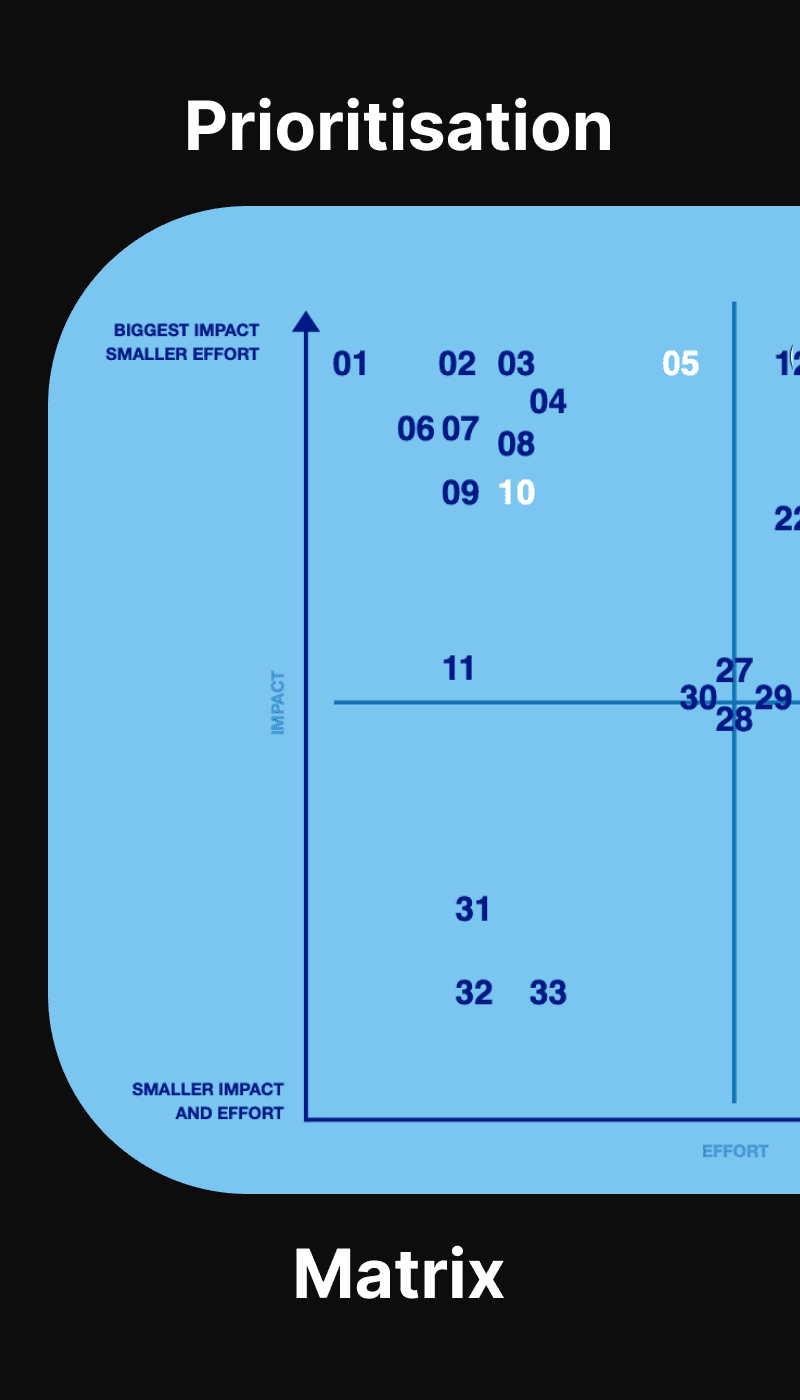
Opportunities & Software Prioritisation
A prioritised backlog of improvement opportunities was produced, focused on the technology pain points identified across the journey. It gave each delivery team a clear starting point to scope buildable projects for their specific area of the flow.


IMPACT
Specialist teams & new projects
The discovery findings enabled Unilever to form specialist consultant teams across the full length of the journey—consultants with the right expertise to address each specific pain point. Rather than a single centralised effort, the work created the conditions for targeted, distributed delivery where each team could focus on the problems most relevant to their part of the process.